Solar Panels in Bedford: Local Energy, Lower Bills, and a Smarter Way to Power Your Property
Bedford and the surrounding towns are embracing a quiet energy revolution. With rising electricity prices and a strong push toward cleaner living, homeowners and businesses are turning to solar panels to reduce bills, boost property value, and cut carbon. Thanks to dependable local installers, modern technology, and supportive UK policies, installing solar PV in Bedford has never been more straightforward—or more rewarding.
Why Bedford Is Ideal for Solar Panels: Sunlight, Savings, and Real-World Results
While Bedford isn’t the Costa del Sol, it enjoys solid year-round solar potential. Well-sited systems in Bedfordshire typically generate around 900–1,100 kWh per kWp annually. That means a 4 kWp roof array can produce roughly 3,500–4,200 kWh per year, significantly offsetting household electricity use. Pair that output with time-of-use management—or even a battery—and the savings quickly become tangible.
Local roof types make a difference, too. South-facing pitches at 25–40 degrees are ideal, but east/west roofs can still deliver excellent value, smoothing generation across the day. Whether you live in a Victorian terrace near the Embankment, a modern build around Wixams, or a family home in Kempston or Biddenham, there’s almost always a workable design using today’s compact, efficient panels and roof-mount systems.
Financial incentives help. Domestic solar currently benefits from 0% VAT on installation in Great Britain, making upfront costs more manageable. Once commissioned, you can sell surplus electricity to the grid through the Smart Export Guarantee (SEG). While export rates vary by supplier, SEG effectively pays you for what you don’t use—further improving system payback. Energy security matters, too: generating on-site power cushions you from market volatility and helps you manage usage intelligently during peak-rate periods.
Planning permission is often not required. Most domestic PV installs are permitted development, provided they follow rules such as minimal rooftop projection and suitable placement away from highway frontages. Exceptions apply for listed buildings, conservation areas, and flats or shared roofs, so a professional survey is essential. For many Bedford homes and commercial premises, design-and-install teams can navigate both planning and grid notifications seamlessly, leaving you with a neat, code-compliant system and clear documentation. If you’re researching reputable local expertise, explore Solar Panels in Bedford to learn how to turn a good roof into reliable, long-term savings.
What to Expect from a Professional Solar Installation in Bedford
A high-quality PV project follows a structured process that puts safety, performance, and compliance first. It begins with a detailed consultation and on-site survey: roof condition, pitch, orientation, and shading from chimneys or trees are all assessed. Installers will check loft access, rafters, and electrical infrastructure, then propose a system size that balances budget, space, and usage. Expect a clear design showing panel layout, inverter choice, cable routes, and projected generation using local irradiance data.
Grid permissions come next. In Bedford, most domestic systems with up to 3.68 kW per phase of export fall under G98 notification rules. Larger systems or those requiring higher export may need prior approval under G99. Your installer should handle these applications and set any necessary export limits to comply with UK regulations and local network constraints. Quality contractors also provide electrical certification and MCS documentation, which you’ll need for SEG payments.
On installation day, scaffolding and roof fixings are fitted first. Mounting rails attach to rafters with weatherproofing to protect the roof. Panels are secured, DC wiring is routed neatly, and the inverter—often located in a loft, utility room, or garage—is installed along with generation and export meters. Where shading or complex roof planes exist, module-level power electronics (such as optimisers or microinverters) may be specified to maximise yield and improve monitoring granularity.
After commissioning, you’ll receive system certificates, user guidance, and login details for a monitoring app. This dashboard shows live performance, historical trends, and alerts if anything needs attention. A reputable installer will walk you through safety features, isolation points, and basic checks, and can schedule maintenance or inspections. For businesses, additional documentation—like O&M manuals and test records—helps meet compliance requirements. The outcomes: a neat, reliable system, predictable savings, and the confidence that everything meets the latest electrical and renewable standards.
Smart Add‑Ons and Local Use Cases: Battery Storage, EV Charging, and Ongoing Care
Modern solar PV works brilliantly on its own, but it shines even brighter alongside smart add-ons. The most popular is battery storage, which lets you capture daytime excess and use it later—ideal for evenings and overnight appliances. In Bedford, a typical 5–10 kWh battery can lift self-consumption dramatically, often enabling 60–80% self-sufficiency in summer and improving winter economics when combined with time-of-use tariffs. Many systems support an Emergency Power Supply (EPS) mode for selected circuits, offering resilience during grid interruptions.
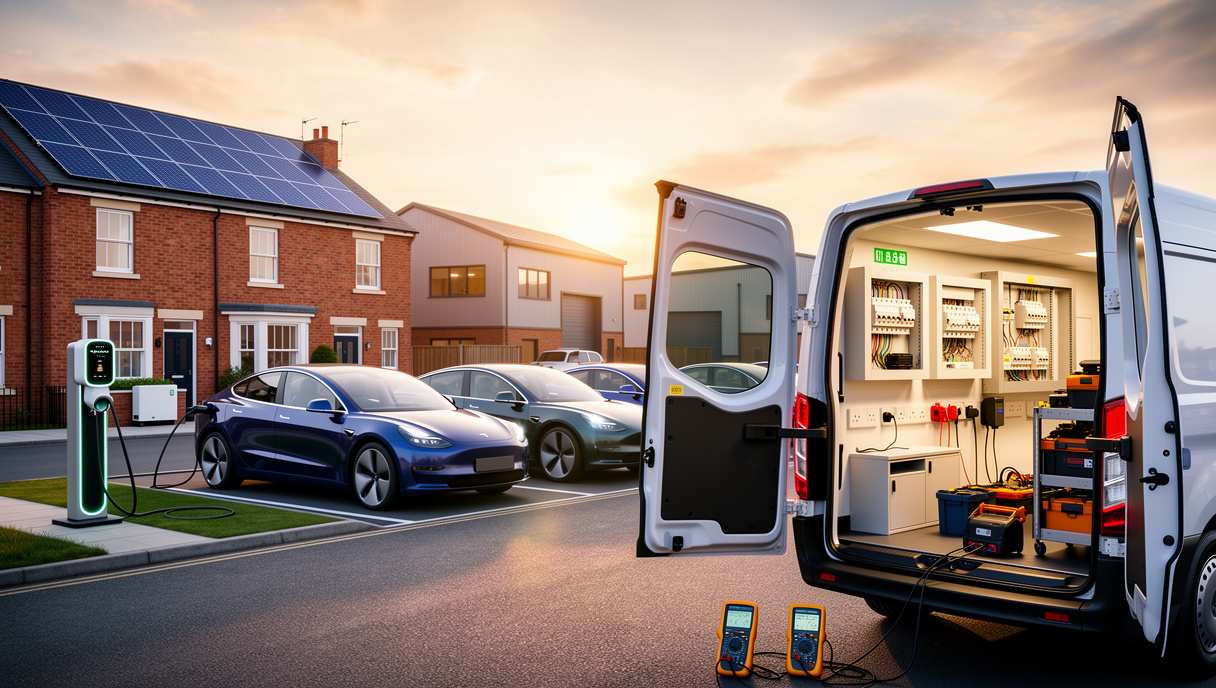
EV charging is another powerful pairing. If you drive electric, diverting surplus solar into your vehicle maximises value and reduces reliance on peak grid rates. Bedford commuters who charge at home can schedule sessions for sunny windows or lower tariff periods. Smart chargers and inverter integrations make this effortless, aligning solar generation, car charging, and battery use so you’re spending pennies rather than pounds per mile.
Real-world scenarios around Bedford show how flexible solar can be. A family in Great Denham might install a 5.2 kWp array with a 7 kWh battery, covering daytime loads and cooking with solar most evenings. A small café off the High Street could add a 12–20 kWp commercial system to offset refrigeration and coffee machines, trimming daytime grid imports and stabilising operating costs. An industrial unit in Elstow or along the A421 corridor could leverage a larger three-phase system—paired with LED lighting upgrades—for a dual impact on bills and carbon reporting.
Maintenance is minimal but valuable. Annual or biannual inspections ensure mounting hardware remains tight, isolators operate correctly, and inverters and RCD protection function as intended. Cleaning may be advised if panels accumulate dust or pollen, though Bedford’s regular rainfall often keeps modules in good shape. Monitoring apps will flag performance dips caused by shading changes or equipment issues; swift fault-finding preserves yield. For commercial sites, routine testing dovetails with broader electrical compliance—like EICR and emergency lighting checks—creating a single, efficient maintenance plan.
Whether you’re a homeowner in Putnoe eyeing lower bills, a landlord improving EPC ratings across a portfolio, or a business aiming for net-zero targets, solar panels offer a practical, future-ready upgrade. With careful design, accredited installation, and smart extras like batteries and EV chargers, Bedford properties can lock in long-term savings and energy independence—powered by local sunshine and supported by professional electrical expertise.

Singapore fintech auditor biking through Buenos Aires. Wei Ling demystifies crypto regulation, tango biomechanics, and bullet-journal hacks. She roasts kopi luwak blends in hostel kitchens and codes compliance bots on sleeper buses.