Mind, Memory, and the Slow Work of Conscience
Strip the mind down past metaphors of brains as engines or computers and something quieter shows: not objects but relations. Patterns that persist. Constraints that select which patterns survive long enough to matter. If reality is, at base, informational — not “data” on a disk but form that resists — then thought looks less like a sealed container and more like a local crossing point. A receiver. A place where signals from body, world, history arrive and compress. From that angle, moral memory isn’t moralizing. It’s inherited structure that lets a mind stabilize itself around what counts as good action, even under pressure, even when novelty overwhelms habit.
We keep building faster instruments. But speed alone has no direction. It’s memory — the long kind, layered over generations — that gives direction the spine it needs. I keep returning to one stubborn thought: a mind without time made thick by shared memory can reason brilliantly and still fail. Not for lack of intelligence; for lack of ballast.
When Information Remembers: A Rough Map of Mind
Begin with a simple claim: the mind is not a marble statue; it’s a transient compression of signals. Some from neurons, some from muscle and gut, some from tools and books, some from the faces of the people who raised us, and their people before them. On this view, philosophy of mind is less the ontology of a special substance and more a study of how constraints — grammatical, biological, cultural — shape and filter experience. The interesting part is not where mind is, but how patterns get preserved and carried forward. When patterns survive, they remember. When they remember, they begin to guide.
Call it informational substrate if you like, but avoid the trap: it isn’t “bits” in the computing sense. It’s whatever form, once created, tends to hold. The orientation of a tool. The cadence of a lullaby. The layout of a legal code. Memory is not mere storage. It’s the persistence of structure that makes new events legible. That’s why time feels personal — because sequence is local. What comes “before” for me is not the same as for you. Yet across those private timelines, shared memory can glue us. A ritual gives two different lives a synchronized beat. A map, a calendar, a law: soft machines for knitting time.
Then the self: not a sovereign at the center but a working summary. An index that updates. The summary matters because action must be timely — you can’t compute over the whole past; you compress. But the quality of the summary depends on the quality of what it compresses. If your inputs are thin or your community has thrown out its old error-corrections, the summary skews. Here moral memory enters: the body of practices that keeps certain distinctions alive — harm versus help, courage versus cruelty, duties that bind strangers, exceptions that must stay rare. Social memory acts like a scaffold around the individual compression. It limits what we forget too quickly.
Viewed this way, mind isn’t only brainbound. It’s distributed across the artifacts that store our second-natures. A city’s signage. A family’s taboos. The canon of cases that judges reach for. A library is cognitive tissue. So is a kitchen table where stories resurface each winter. These are not vibes; they are infrastructure for attention and restraint. Where they thin, minds drift. Where they tangle well, minds orient and repair.
Moral Memory: Rituals, Laws, Stories, and the Long Body
“Moral memory” sounds old-fashioned. Good. It should. Slow memory has a different job than sensation or cleverness: it lets a group update just slowly enough to keep itself from being gamed by each new incentive. Anthropologists have written this in other language — cumulative culture, prestige-biased transmission, institutions as evolved tech. Whatever the label, the function is clear: to retain past hard-won lessons as living constraints. Not doctrines frozen and worshiped, but habits that live by being re-enacted and argued over.
Take ritual. Often dismissed as excess. Yet rituals are timing devices. They resynchronize the many local times of individuals into a common beat. Weekly pauses that interrupt exploitation. Seasonal generosity that makes scarcity survivable. Grief rites that metabolize loss so it doesn’t rot into revenge. None of this is mystical; it’s engineering for emotional load. That’s why healthy traditions make room for dissent and reform while still preventing constant churn. Change without memory is noise. Memory without change is ossification. The middle is hard. The middle requires institutions that can argue with themselves and still remain recognizable the next morning.
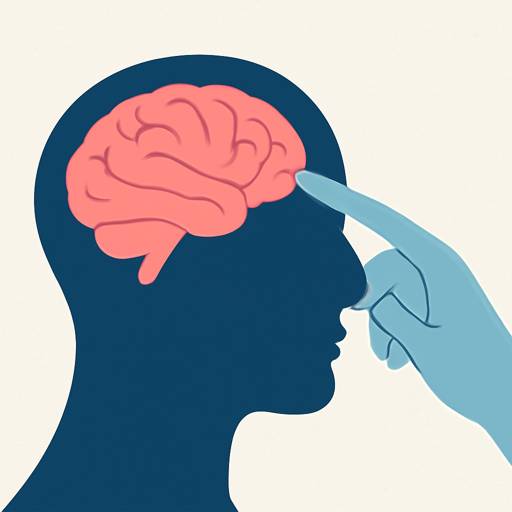
Laws are another surface where moral memory writes itself. Not just statutes — case law, customs, defaults. Precedent functions like a low-pass filter over time. It resists mood swings, hedges against motivated reasoning, slows the rate at which powerful actors can redefine the good. The history of a rule is part of its meaning; the archive is not ornament but organ. Likewise stories. Fables are test-scenarios that run in a child’s head before the real emergency. Suddenly the wolf at the door is a distribution of risks, not a cartoon. Stories compress the lab notes of generations into situations vivid enough to teach under stress.
Of course, memory can go wrong. Harmful constraints persist — superstition, cruelty defended as “tradition.” The answer is not demolition of all memory structures but selection pressure: open courts, plural sources of authority, experimental zones, feedback that bites. The social system learns by releasing new variations and then judging them sharply. The judgment needs archives. And friction. Fast platforms that skip deliberation create moral amnesia. They reset norms by popularity spikes rather than reasoned revision. The price shows up later, in a kind of ethical jet lag. To take this further — and to test it against analytics-heavy governance — explore the link on philosophy of mind and moral memory. The thesis there: information as substrate only matters if we honor how communities remember.
Building Machines Without Ancestors: The AI Memory Problem
Now the modern puzzle. We are building agents that can speak, predict, summarize, optimize — but they have no grandparents. No monasteries or kitchen tables, no rites, no courts of memory. What they have instead: training corpora, gradient updates, policy layers, patches. Patches everywhere. The corporate phrase is tidy: “safety.” In practice it often means thin constraints slapped on the surface, tuned to survive an audit. Moral patching. It calms a regulator and staves off a headline. It does not create moral memory. Because memory is not a blacklist; it’s a civilization of constraints — living, argued, recorded, slow.
Can machines inherit such civilization? Not by osmosis from scraped text. Data is evidence of what people said or did; memory is the structural record of how communities corrected themselves after it went wrong. That record includes process — who got to object, how precedent weighed on novelty, when exceptions were allowed and then closed. If we want artificial systems that don’t simply mirror incentives back at scale, we need memory surfaces built in. Surfaces with friction. Mechanisms that preserve traceability of reasons, that keep a public trail of what the model refused and why, and how that refusal matured with counterexamples. Not just deployment logs. An archive that a citizen can challenge.
Picture a service scenario. A model used for local benefits screening recommends denial. Today: the decision is wrapped in proprietary fog. Tomorrow: the model supplies a lineage of reasons — constraints inherited from law and local policy, plus a public docket of contested edge-cases. Appeals plug into the same memory and update it at measured intervals. No “hot fixes” that swing outcomes before review. Conscience, with latency. Not because delay is good in itself but because some virtues require time to think. Conscience should be awkward to edit. You could even budget for it — a portion of engineering time dedicated to argument infrastructure: counterexample submissions, narrative test suites, adversarial drills run with civic partners, all captured as evolving precedent.
Open tooling helps. Not as dogma, but because secret memory can’t be common memory. Community oversight isn’t flawless, but it dulls perverse incentives. It also distributes the work of carrying long lessons, which no single lab can do. Yes, there are trade-offs: privacy, misuse, the danger of crowds. But the alternative we’re drifting into is worse — closed systems that learn rapidly but forget responsibly, because responsibility was never written into their clock. They run fast in a short present. They will make choices with the confidence of bright amnesiacs.
There’s a final technical point, and it looks small. Time. Models operate in tokens and steps, not calendars and funerals. If sequence is local to human life, we’ll need translation layers that let model updates feel the weight of human intervals — quarters, school years, election cycles, mourning periods. Maybe we formalize “slow windows” where moral constraints are reviewed and hardened; “fast windows” where exploration is allowed but never silently normalized. Maybe we expose the machine’s summary of itself to public contest. A self that can be argued with. A self that remembers losing an argument last year and keeps that scar as signal, not clutter.
This is not nostalgia for a pre-digital age. It’s design advice from the long body of human practice: intellect runs on oxygen; character runs on accumulated constraint. If mind is a receiver and the self a working summary, then good systems keep the right things hard to change. Hard, not impossible. We need room to repair bad memory too. The work is delicate. And continuous. And — if we’re honest — unfinished in ways that should make us slow down before we speed up again.

Singapore fintech auditor biking through Buenos Aires. Wei Ling demystifies crypto regulation, tango biomechanics, and bullet-journal hacks. She roasts kopi luwak blends in hostel kitchens and codes compliance bots on sleeper buses.